Project Snapshot
Project Date: September 2024
Project Location: Tianjin LNG Terminal, China
Client: PipeChina Beijing Pipeline Co., Ltd.
Application: Support poles for laser methane detection in an LNG hazardous area
Deployment: 12 sets of 304 stainless steel equipment poles(3 m poles: 8 sets, 6 m poles: 4 sets)
Delivery Lead Time: 7 days for production, supply, and site delivery
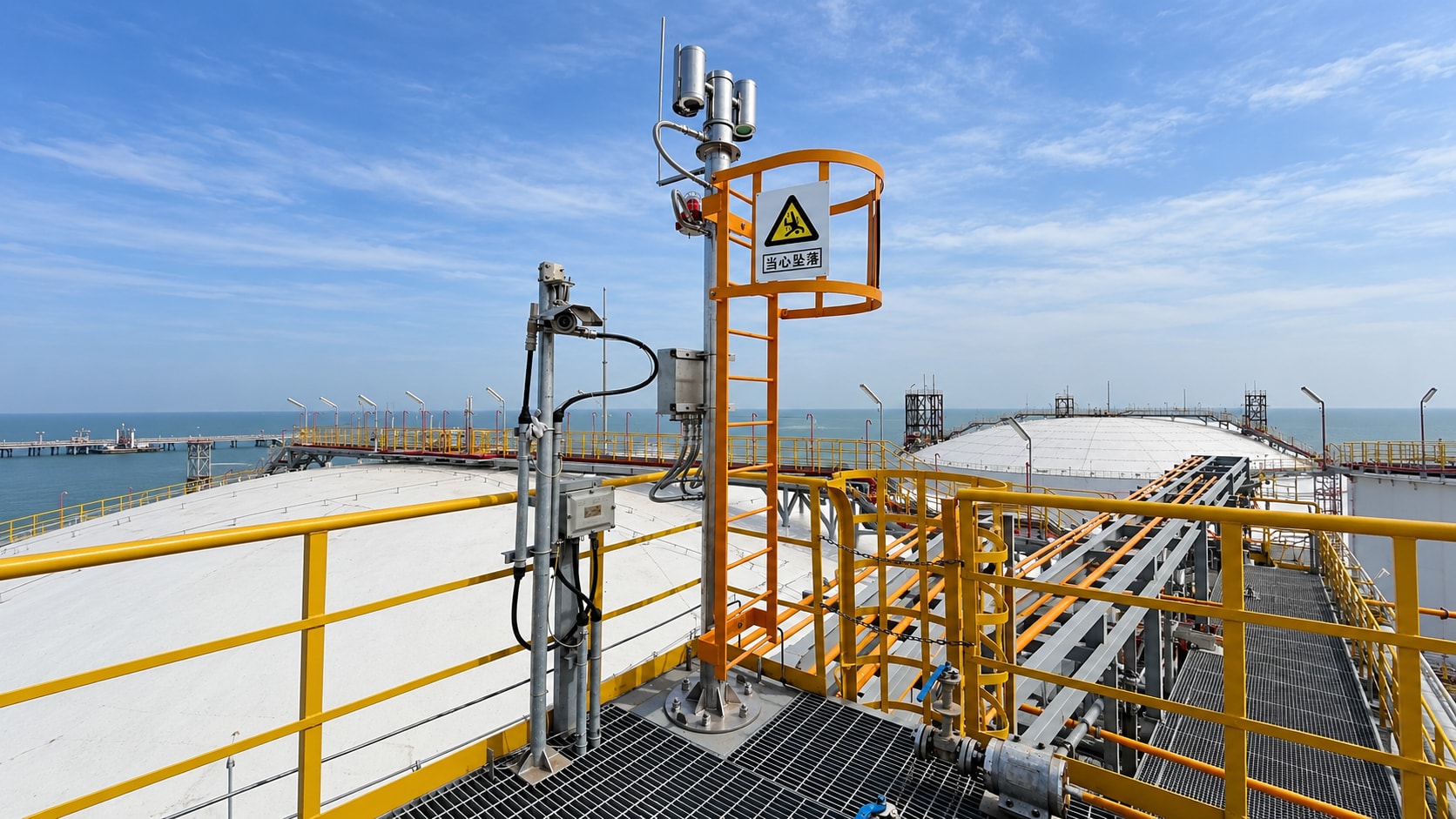
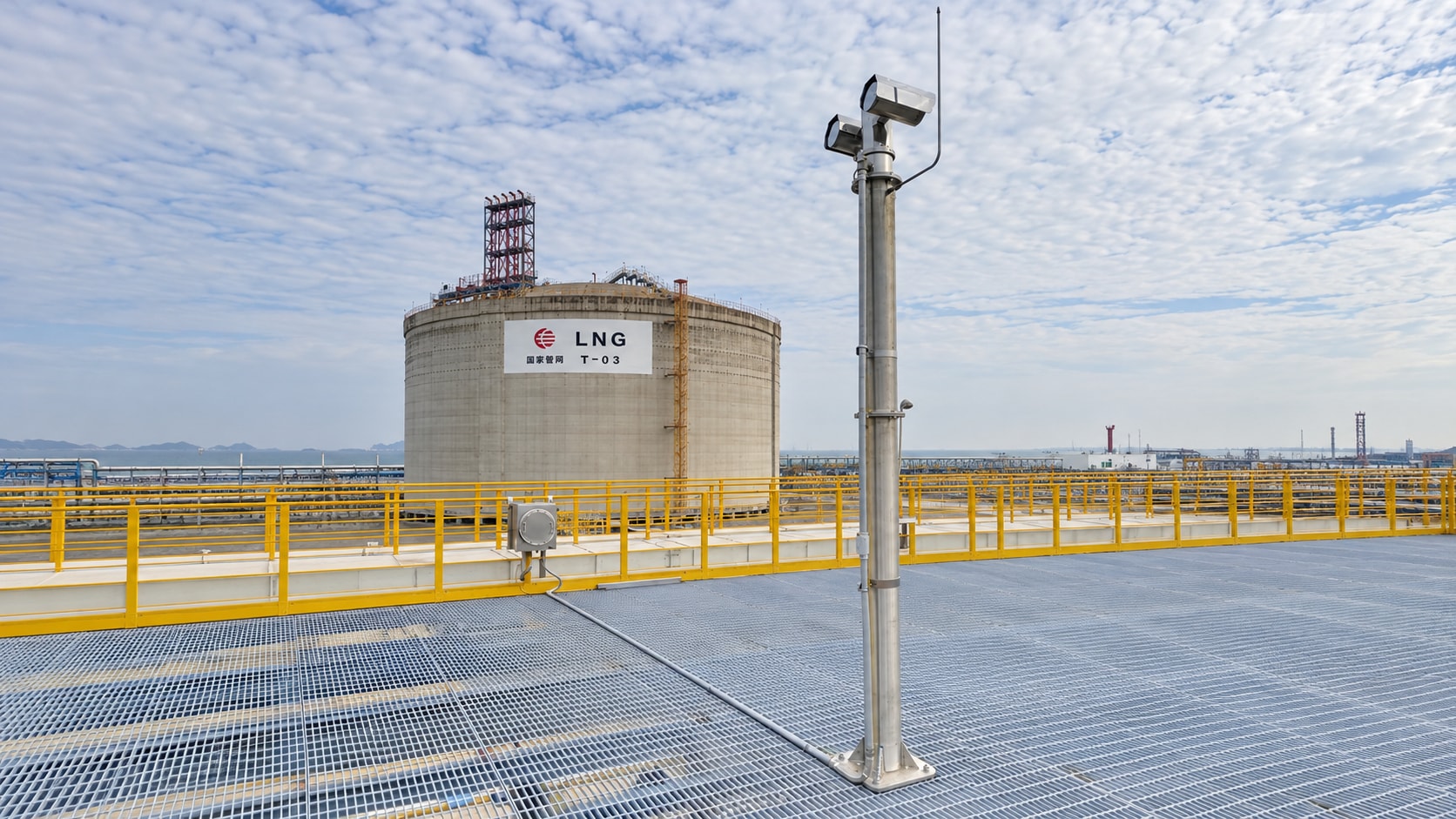
This project provided dedicated support poles for a laser methane detection system at an LNG receiving terminal. The installation area is located close to large LNG storage tanks in a coastal industrial environment and uses existing steel grating platforms.
The pole system was therefore required to address hazardous-area equipment installation, coastal corrosion, restricted platform conditions, different detector line-of-sight requirements, and a short delivery window.
1. Hazardous-Area Equipment Installation
The LNG tank area is classified as a hazardous location with potential flammable gas exposure.
The support poles had to accommodate detector mounting, internal cable routing, and junction-box interfaces while minimizing exposed cabling and remaining compatible with the site’s hazardous-area electrical system.
2. Coastal Corrosion Environment
The terminal is exposed to high humidity and salt-laden air.
The pole structure required suitable corrosion resistance for long-term outdoor service in a coastal LNG environment, with particular attention to reducing maintenance caused by atmospheric corrosion.
3. Restricted Steel Grating Platform Installation
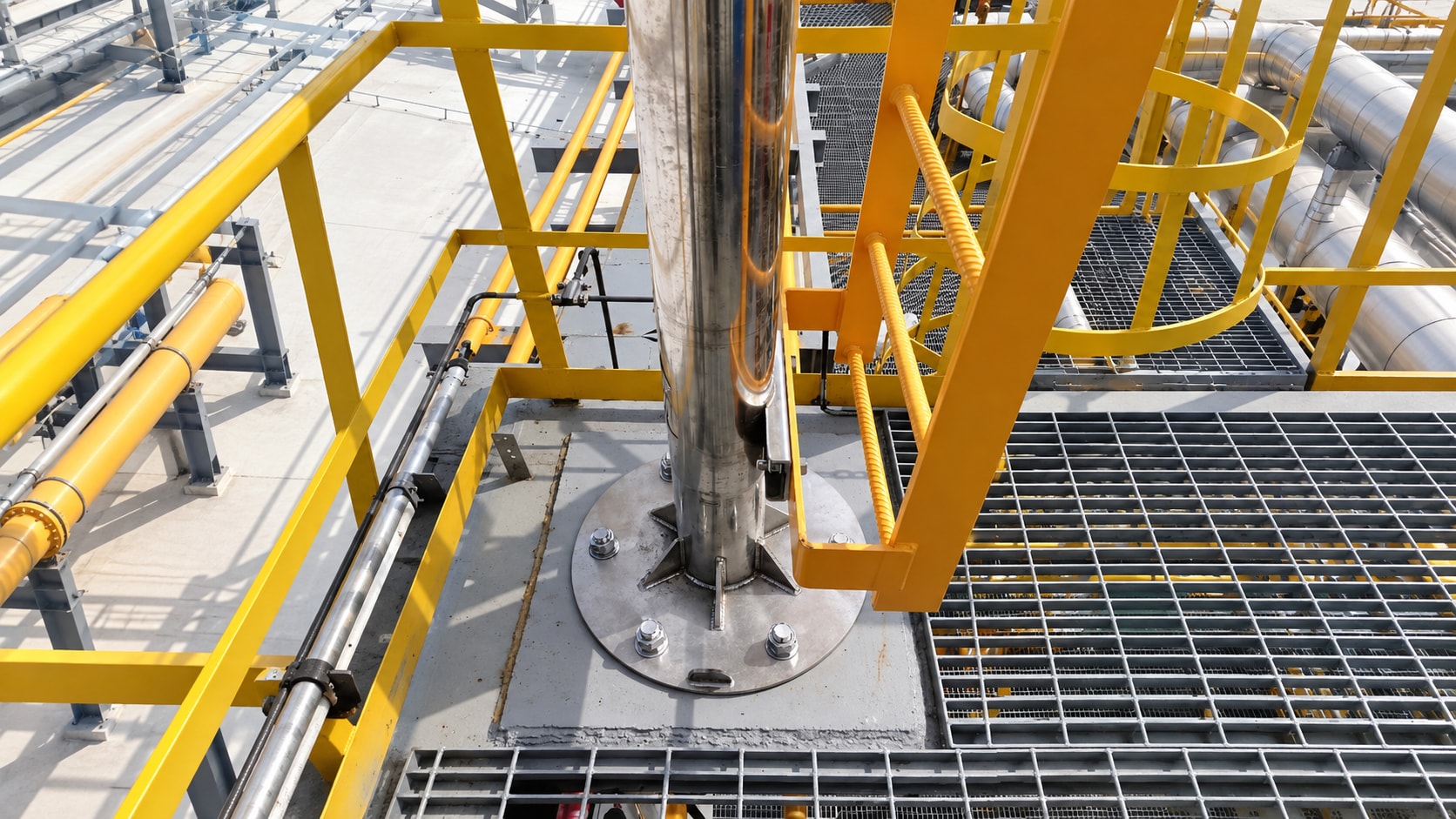
The poles were installed on existing steel grating platforms with limited space and foundation conditions.
The base design therefore had to suit the platform structure while minimizing modification to the existing grating and corrosion-protection system.
4. Different Detector Line-of-Sight Requirements
Monitoring distances and sightlines varied between installation points.
Different pole heights were required to provide suitable mounting elevations and clear line-of-sight conditions for the laser methane detectors.
5. Seven-Day Delivery Window
The terminal had a limited maintenance and installation window.
All 12 pole assemblies had to be manufactured and delivered within 7 days to avoid delaying detector installation and system commissioning.
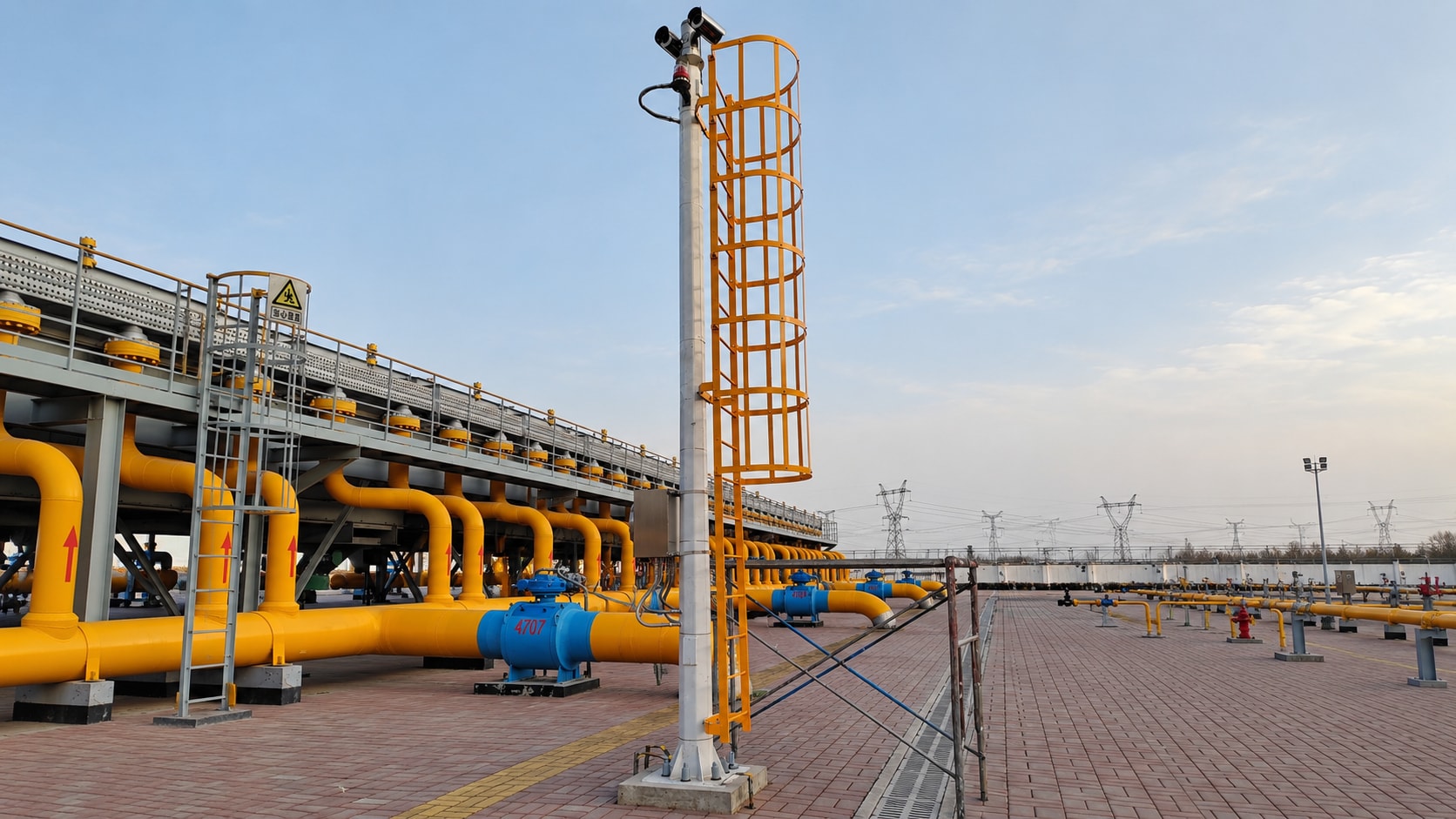
1. 304 Stainless Steel Pole Construction
The complete pole structure was manufactured from 304 stainless steel to improve corrosion resistance in a humid, salt-laden coastal environment and reduce long-term outdoor maintenance requirements.
2. Hazardous-Area-Oriented Mounting and Cable Routing
Internal cable routing was integrated into the pole design to reduce exposed wiring.
The poles were also prepared with:
- detector mounting interfaces
- internal cable pathways
- junction-box mounting provisions
- space for related field accessories
This simplified integration with the laser methane detectors and associated hazardous-area electrical components.
3. Flanged Base for Steel Grating Platforms
A reinforced flanged base was used to match the existing steel grating platform.
This configuration reduced the need for extensive civil works and simplified on-site installation without major modification to the original platform structure.
4. Dual-Height Configuration Based on Line of Sight
Two pole heights were selected according to detector location and monitoring sightline requirements:
- 3 m poles: for shorter-range monitoring points
- 6 m poles: for locations requiring higher mounting elevation and wider monitoring visibility
We determined pole height based on detector position, line-of-sight conditions, and available installation space rather than a single standard configuration.
5. Standardized Fabrication for Fast Delivery
Pole shafts, mounting brackets, flanged bases, and internal routing provisions were fabricated using standardized production and welding processes.
All 12 pole assemblies were completed and delivered within the required 7-day project window.
|
|
The stainless steel support poles provided stable mounting for the laser methane detection system and supported continuous methane leak monitoring across the LNG tank area.
→All 12 pole assemblies were completed and delivered within 7 days, supporting on-schedule installation and commissioning.
→304 stainless steel construction improved corrosion resistance in the coastal environment and reduced long-term maintenance requirements.
→The flanged base design reduced on-site civil work and secondary fabrication while minimizing modification to the existing steel grating platform.
→Internal cable routing and reserved hazardous-area interfaces reduced exposed wiring and supported more organized field installation.
→3 m and 6 m pole configurations matched different detector locations and line-of-sight requirements.
|
|
Pole Material: 304 stainless steel
Pole Heights: 3 m × 8 sets; 6 m × 4 sets
Structure Type: Fixed integrated equipment support pole
Mounting Method: Flanged base installation
Cable Routing: Internal cable routing
Equipment Interface: Mounting provisions for laser methane detection equipment
Application Environment: LNG hazardous area, coastal high-humidity and salt-laden atmosphere
The project supply scope included:
■stainless steel pole structures
■equipment mounting brackets
■flanged bases
■internal cable routing provisions and reserved interfaces
Tips: Laser methane detectors and site hazardous-area electrical equipment were outside the pole supply scope.
This project demonstrates our capability to provide custom equipment support poles for energy and hazardous industrial applications, including:
◎LNG terminals
◎oil and gas storage and transmission facilities
◎natural gas pipeline stations
◎hazardous-area gas detection systems
◎coastal industrial sites
◎CCTV, gas detection, and industrial sensor applications
Pole material, height, base structure, equipment interfaces, and cable routing can be engineered according to project-specific site conditions and equipment configurations.