Product Overview
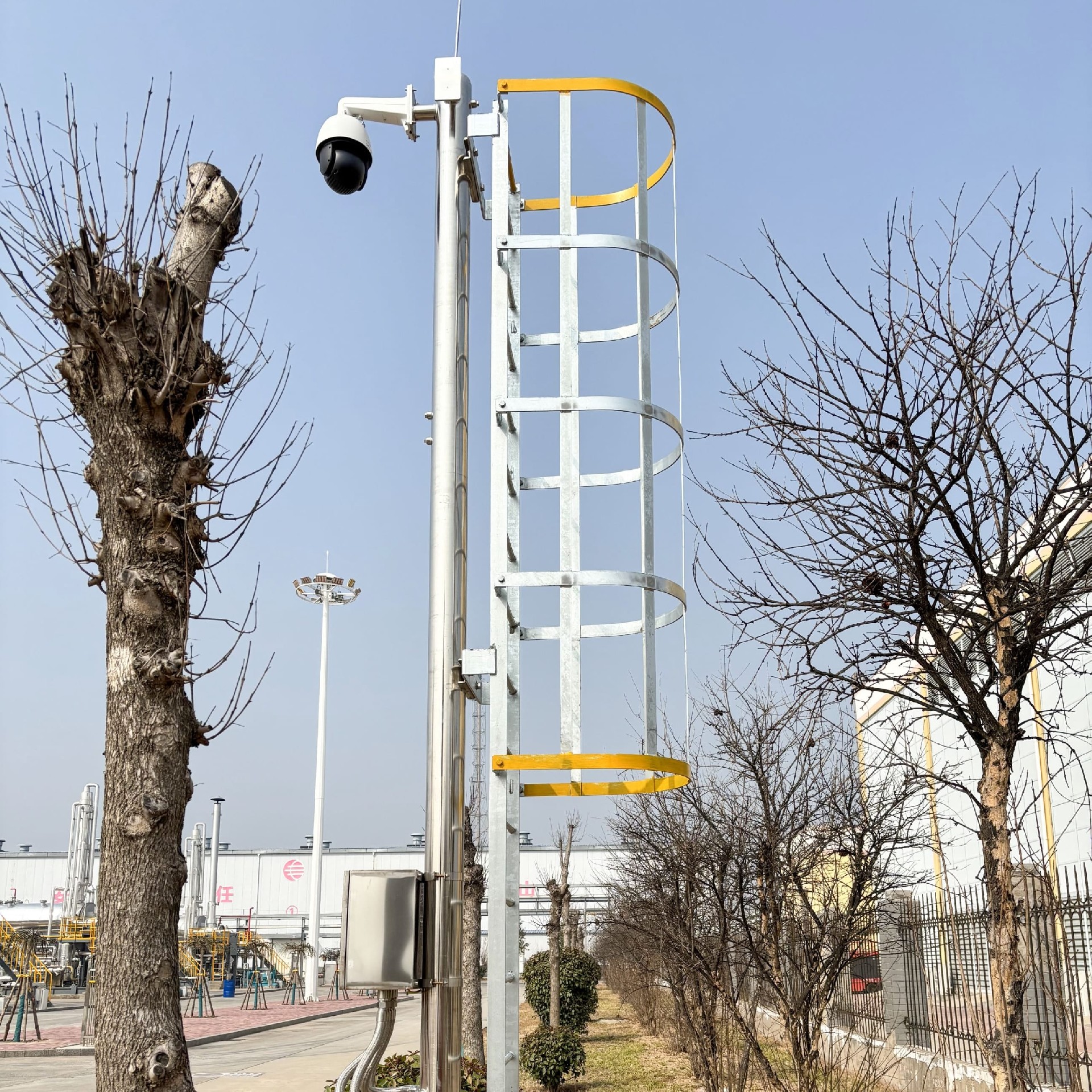
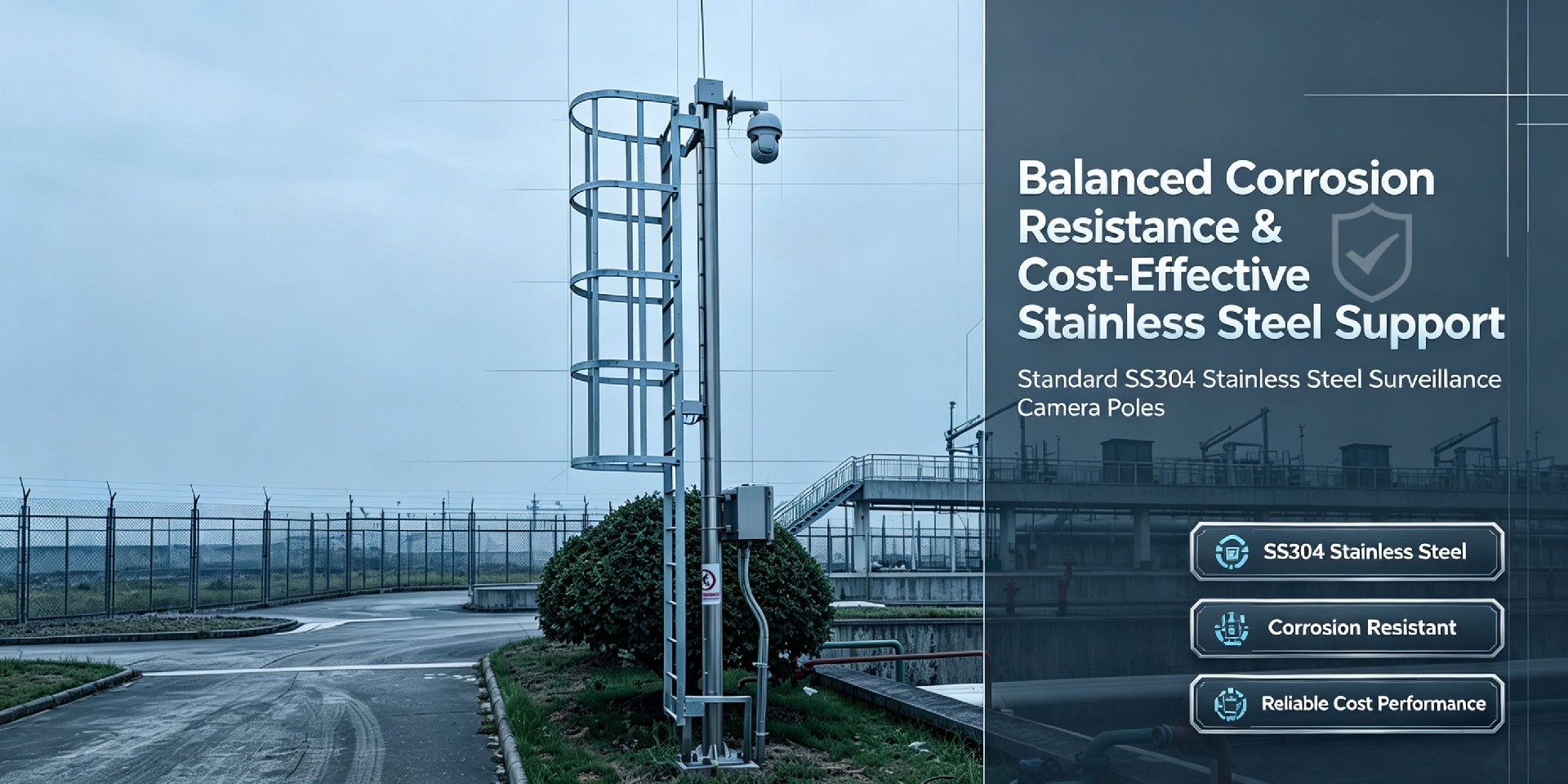
Standard-grade stainless steel poles designed for general-purpose surveillance projects. Delivering inherent rust resistance without hot-dip galvanizing, this series is optimized for moderate wind speeds and medium-payload requirements.
⚠️ Engineering Note: Not intended for extreme marine-grade C5-M or heavy radar payload applications—please select our Heavy-Duty SS316L series for harsh-condition projects.
Coating-Free AISI 304 / EN 1.4301 — ≥515 MPa tensile, ≥205 MPa yield; self-healing passive layer; C3 ready with zero risk of paint chipping or peeling.
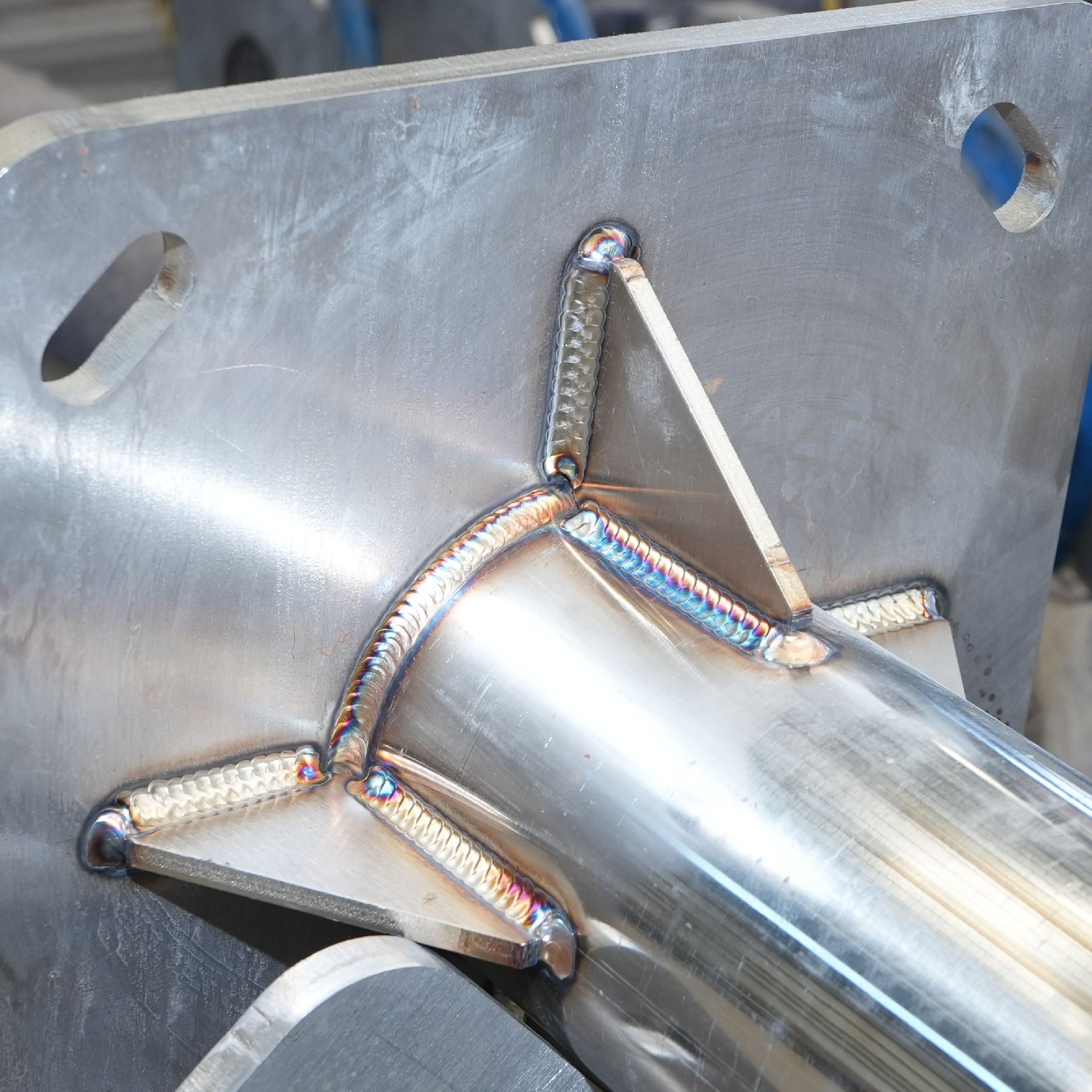
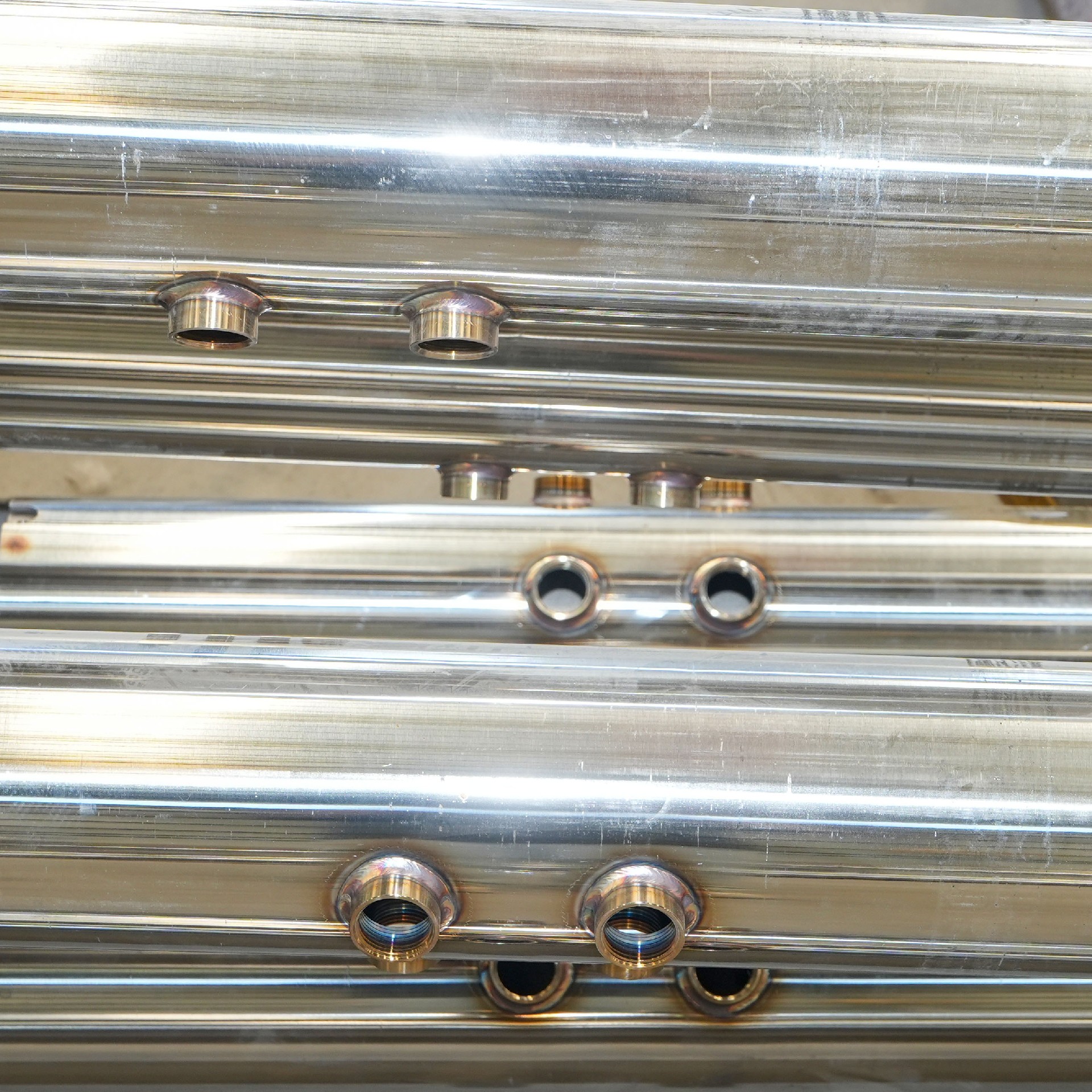
Certified Weld Integrity — TIG-welded, fully pickled and passivated, and 100% PT-inspected to ISO 5817 / AWS D1.6 standards.
Reliable Medium-Duty Capacity — Rated for ≤50 kg payloads; certified for stable imaging under 35 m/s (126 km/h) wind with deflection controlled to ≤L/200.
Flexible Architectural Finishes — Available in a self-cleaning brushed metallic finish or custom RAL powder coating.
Optimized Cost-to-Performance — Delivers full stainless durability and aesthetics at a fraction of SS316L material costs.
| Parameter | Standard SS304 Stainless Steel Pole Specification |
| Pole Height | 4 m – 12 m (Standard Series) |
| Material | AISI 304 / EN 1.4301 Stainless Steel |
| Rated Payload | ≤ 50 kg (under ≤ L/200 deflection criteria) |
| Wall Thickness | 3mm - 6mm(Customized per height & load) |
Surface Treatment | Brushed Finish OR Powder Coated (Custom RAL colors available) |
Supported by an ISO 9001:2015 quality management system, we can adapt pole design, manufacturing quality control, corrosion protection, and technical documentation to project-specific standards and local requirements, supporting overseas project approval, procurement, and acceptance.
Structural Design & Wind Load Verification: Structural calculations can be performed in accordance with EN 40 / EN 1993, AASHTO, applicable AS/NZS standards, SASO requirements, or other project-specified codes. Design verification can incorporate site wind speed, equipment loads, mounting height, and environmental conditions.
Welding & Manufacturing Control: Welding procedures and quality control can be adapted to applicable EN 1090 execution requirements and ISO 3834 welding quality requirements, with corresponding process, inspection, and documentation controls implemented as required by the project.
Corrosion Protection: Hot-dip galvanizing and coating systems can be configured according to the project environment and required service life. Treatments can be specified to ISO 1461, ASTM A123/A123M, or other project requirements for standard outdoor, coastal, high-humidity, and high-salinity environments.
Engineering Documentation Support: Project documentation can include structural calculation reports, shop drawings, material certificates, welding records, galvanizing or coating inspection reports, dimensional inspection records, and factory quality documentation for client, consultant, or EPC review.
Multi-Market Project Support: We support project requirements across Europe, North America, the Middle East, and Asia-Pacific. Applicable design standards, inspection requirements, and document packages can be defined according to the project location and technical specification.
1. Coating-Free Inherent Protection
On coastal and harsh inland sites, galvanized and painted poles inevitably chip, trap moisture, and rust at the first scratch—risking costly 10-to-20-year asset replacements. AISI 304 (EN 1.4301) contains ≥17.5% chromium and ≥8% nickel, forming a dense, self-healing chromium-oxide passive layer that requires no hot-dip galvanizing or surface coatings. Backed by ≥515 MPa tensile and ≥205 MPa yield strengths, it ensures zero rust staining and near-zero maintenance across ISO 9223 C3–C4 environments, securing decades of structural service at minimal lifecycle cost.
2. Certified Weld Quality & Compliance
Weld porosity, incomplete fusion, and heat-tint oxidation often trigger fatigue cracks, handover rejections, and liability issues. Every joint is precision TIG-welded, fully electrolytically passivated to restore corrosion resistance in heat-affected zones, and subjected to 100% penetrant testing (PT) per ISO 5817 / AWS D1.6. This guarantees flawless compliance that easily clears third-party inspections and delivers long-term operational safety.
3. Trouble-Free Medium-Duty Payload Capacity
Undersized poles force integrators into frustrating on-site modifications or emergency retrofits. This pole is structurally engineered for standard PTZ and bullet cameras up to 50 kg. Verified under 35 m/s (3-second gust, ≈126 km/h) design wind loads with deflection strictly controlled to ≤L/200, it allows direct camera mounting with zero load re-evaluation and rock-solid image stability.
4. Seamless Architectural Integration
Standard industrial poles often clash with modern urban landscapes. Choose between a uniform brushed metallic finish—which is naturally rain-cleansed and maintenance-free—or custom RAL powder coating. It blends effortlessly into contemporary cityscapes, easily satisfying stringent architectural review boards.
5. Smart Budgeting with High-Performance Stainless Steel
While marine-grade SS316L severely stretches budgets, standard carbon steel inevitably rusts in C3–C4 zones. AISI 304 bridges this gap precisely, delivering the long-term durability and aesthetic appeal of stainless steel at a fraction of SS316L cost—providing premium, high-value protection for mid-tier budgets.
⚠️Application Note: SS304 is not recommended for continuous heavy salt spray or high-chloride marine environments. For C5-M port and offshore projects, please specify SS316L.
Our standard SS304 poles feature pre-drilled Mounting interfaces and universal brackets, ensuring seamless integration with mainstream global brands:
Cameras: Bullet, PTZ, Dome (Standard Interface), Laser PTZ.
Sensors: Environmental, Traffic & Methane Gas Detection.
Enclosures: Universal Security Power Supplies & Battery Enclosures.
🔧 Precision Fit: Custom hole drilling, crossarms, and flange patterns are available upon request based on CAD templates. Precision laser-cut top brackets can be tailored to specific camera footprints (e.g., Axis, Hanwha, Bosch), eliminating on-site drilling and accelerating installation.
Comparison | Standard SS304 Stainless Steel Pole | Heavy-Duty SS316L Stainless Steel Pole |
| Material Grade | AISI 304 / EN 1.4301 | SS316L / EN 1.4404 (Molybdenum-alloyed) |
| Applicable Wind Speed | ≤ 35 m/s (approx. 126 km/h) | ≤ 49 m/s (approx. 177 km/h) |
| Rated Payload | Up to 50 kg | Up to 200 kg |
| Typical Scenarios | City roads, industrial parks, perimeter security, mild salt-spray shorelines | Seaports, offshore-adjacent sites, radar arrays, typhoon-prone zones |
| Engineering Docs | Standard Condition Calculation Sheets | Customized Project-Specific Wind-Load Report |
| Notes: Dimensions, payload, and corrosion performance are project‑specific, subject to site wind‑load calculation. All specifications are for reference only. | ||
Trusted by system integrators worldwide for general-purpose stainless steel surveillance deployments:
Urban Road Surveillance Retrofit: 6m SS304 Poles, 220 Units, City Downtown
Industrial Park Perimeter Security: 8m SS304 Poles, 95 Units, Suburban Industrial Zone
Smart Community Surveillance: 4m SS304 Poles, 260 Units, Residential Compound
⚡ Galvanic Corrosion Prevention: Carefully match fastener materials. When connecting dissimilar metals, use isolating non-conductive gaskets. (Service option: Pre-installed nylon/EPDM isolation gaskets available upon request).
💧 Drainage & Sealing: Keep base drainage openings unobstructed; hand-hole covers and seals must remain intact. Never bury flange plates underground.
🛡️ Surface Protection: Protect passivated and brushed surfaces from mechanical scratches during installation. Local touch-up passivation treatment is required for any damaged areas.
🔌 Grounding Requirement: Complete proper grounding and equipotential bonding in compliance with local electrical codes.
🏗️ Foundation Rules: Anchor bolts and concrete foundations must satisfy local wind-load requirements. Erect poles only after concrete has fully cured.
We provide custom wind-load calculation reports, 2D CAD drawings, installation manuals, and tender technical documents to support your global project approvals and customs clearance.
For general-purpose technical handbooks and safety guidelines, please visit our Download Center→
🚀 Rapid Delivery: Typically ship within 3–5 weeks.
💰 Volume Pricing: Tiered pricing structures available for bulk orders.
📦 Export-Grade Packaging: Moisture-proof and shock-resistant packaging optimized for safe container loading.
📊 Real-Time Tracking: Dedicated project managers providing regular production progress updates.
Q1: What is the difference between SS304 standard poles and Heavy-Duty SS316L poles?
A: SS316L contains molybdenum for superior resistance against chloride-induced pitting corrosion. It supports higher wind speeds, heavier payloads, and meets C5-M marine grades. Standard SS304 is a cost-effective option optimized exclusively for inland and mild coastal C3–C4 projects.
Q2: Can SS304 poles be installed at coastal sites?
A: They are suitable only for mild coastal C3–C4 locations without persistent heavy salt spray. For port, dock, or open-ocean C5-M projects, Heavy-Duty SS316L is mandatory.
Q3: What payload can this standard SS304 pole support?
A: It is rated up to 50 kg under design wind speed parameters. Actual allowable payload decreases as pole height increases; project-specific calculations are available upon request.
Q4: What does your warranty cover for standard SS304 poles?
A: Our structural warranty covers base tube and weld-joint failures under defined design conditions. It does not cover mechanical impact damage, improper installation, usage exceeding design wind speeds/payloads, high-chloride over-spec environments, or natural minor surface discoloration of the stainless steel passivation layer (discoloration is cosmetic and does not equate to structural failure).
Q5: Can you provide Mill Test Certificates (MTC) for raw stainless steel material?
A: Yes, EN 10204 3.1 material certificates can be supplied upon request to verify chemical composition and traceability.
Q6: What is your MOQ and lead time for customized orders?
A: For standard-height poles, our Minimum Order Quantity (MOQ) is highly flexible, starting from just 1 unit for trial orders. For customized or project-specific orders, the MOQ is subject to negotiation based on your exact specifications. Standard models typically ship within 3–4 weeks, while customized orders generally require 4–6 weeks for production, depending on the complexity of the design and order volume.
Q7: Can you customize pole dimensions, flange patterns, and RAL colors per our project drawings?
A: Absolutely. We provide full dimensional and aesthetic customization to seamlessly integrate with your project design. This includes customizing pole height, wall thickness, base plate/flange patterns, crossarm configurations, and powder coating in any custom RAL color. Simply send us your CAD templates or project drawings, and our engineering team will provide a tailored solution and quotation.
Q8: What payment terms do you offer?
A: We offer flexible and secure payment terms to accommodate international B2B transactions. Our standard terms are 30% T/T in advance as a deposit, with the 70% balance paid before shipment. We also accept Irrevocable L/C at sight for larger project orders. Specific terms can be negotiated for qualified buyers with established credit.
Specifications are typical values for reference only under standard conditions — not a guarantee. Final performance shall be determined by project design calculations and factory test reports. Consult a local engineer before specifying.